Healthcare Technologies: Innovation and Latest Trends
Hovhannes Adajyan · June 12, 2026 · 9 min read
Abstract
This report explores the latest trends in healthcare technologies, including artificial intelligence, telemedicine, wearable devices, robotics, personalized medicine, cybersecurity, blockchain, synthetic data, and Armenia's digital health opportunities.
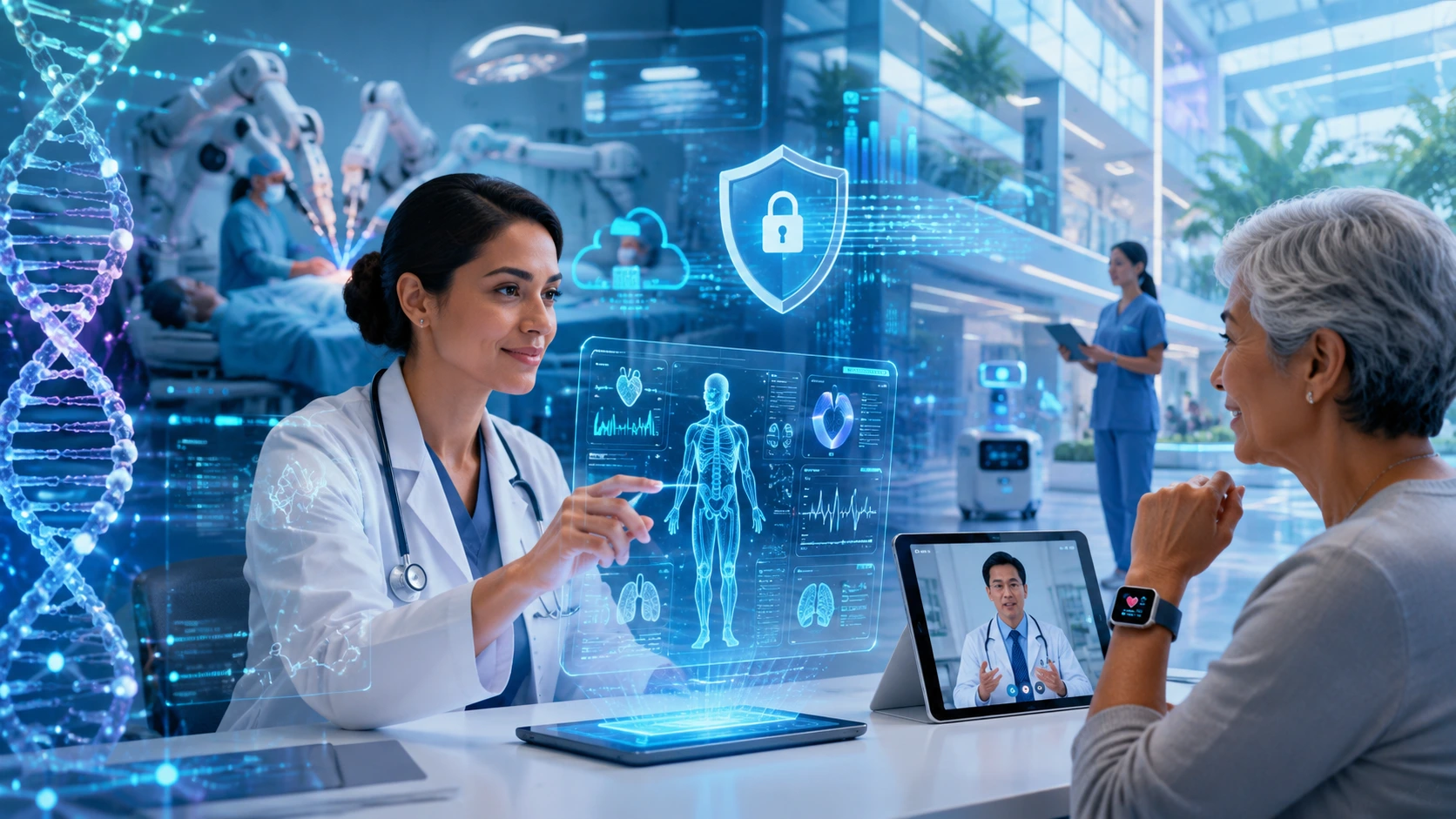
Healthcare Technologies: Innovation and Latest Trends
Executive Summary
Healthcare is entering a new stage of digital transformation. The sector is no longer shaped only by hospitals, doctors, medicines, and medical equipment. It is increasingly shaped by data, artificial intelligence, connected devices, robotics, digital platforms, personalized medicine, cybersecurity, and secure health information systems.
The main direction of innovation is clear: healthcare is moving from a reactive model, where patients usually receive treatment after illness appears, toward a proactive and preventive model, where health risks can be detected earlier, care can be delivered closer to the patient, and medical decisions can be supported by real-time data.
Artificial intelligence, telemedicine, wearable sensors, digital therapeutics, robotic surgery, 3D printing, genomics, blockchain, and cybersecurity are becoming important parts of modern health systems. These technologies can help doctors make faster and more accurate decisions, reduce administrative burden, improve access to care, support patients with chronic diseases, and make healthcare systems more resilient.
For countries like Armenia, healthcare technologies are not only a medical issue. They are also a digital economy opportunity. The development of digital health can create new markets for startups, support local research, improve public services, and connect Armenia with global innovation networks.
1. The Digital Transformation of Healthcare
Modern healthcare systems face several common challenges: rising costs, ageing populations, shortages of medical professionals, long waiting times, unequal access to services, and the growing burden of chronic diseases. Traditional healthcare models are under pressure because they rely heavily on physical infrastructure and in-person services.
Digital technologies offer a new approach. Instead of treating healthcare only as a physical place, they allow healthcare to become a connected ecosystem. In this ecosystem, hospitals, clinics, laboratories, pharmacies, doctors, patients, insurers, researchers, and public institutions can exchange information more effectively.
The foundation of this transformation is health data. Electronic health records, digital prescriptions, laboratory information systems, imaging databases, wearable devices, and mobile health applications create large volumes of medical information. When this data is accurate, secure, and interoperable, it can improve diagnosis, treatment, prevention, management, and policymaking.
The World Health Organization emphasizes that digital health innovation should improve quality of care and patient safety while remaining fair, inclusive, and accessible. This is important because healthcare technologies must not only be advanced; they must also be trusted and usable by society.
2. Artificial Intelligence in Healthcare
Artificial intelligence is one of the most important technologies shaping the future of healthcare. AI systems can analyze medical images, detect patterns in patient data, support clinical decision-making, automate documentation, assist drug discovery, and provide first-line patient guidance.
AI-Powered Diagnostics
One of the most advanced uses of AI is in diagnostics. AI tools are already being used in radiology, pathology, dermatology, cardiology, ophthalmology, and other fields. These systems can detect suspicious patterns in X-rays, CT scans, MRIs, ultrasound images, and laboratory results.
The purpose is not to replace doctors. The real value of AI is to support medical professionals by acting as a second layer of analysis. AI can help prioritize urgent cases, reduce diagnostic delays, and allow doctors to focus more attention on complex patient decisions.
The U.S. Food and Drug Administration maintains a public list of AI-enabled medical devices authorized for marketing in the United States. This shows that AI is already moving from research laboratories into regulated clinical use.
AI for Administrative Efficiency
A major problem in healthcare is administrative burden. Doctors and nurses often spend significant time filling forms, writing clinical notes, reviewing records, and managing documentation. AI can reduce this burden through automatic transcription, summarization of medical records, clinical note drafting, appointment support, and workflow automation.
This is important because technology should give time back to clinicians. If used correctly, AI can reduce burnout and allow medical staff to spend more time with patients.
AI Agents and Symptom Triage
AI agents are more advanced than simple chatbots. They can guide patients through symptoms, recommend the right level of care, help schedule appointments, support follow-up care, and monitor treatment compliance. In the future, AI agents may become the first digital entry point for many patients.
However, this area requires strong safeguards. AI-based triage must be medically validated, transparent, and supervised. It should not create false confidence, delay urgent treatment, or provide unsafe advice. The best model is a hybrid system where AI supports access and efficiency, while medical professionals remain responsible for clinical decisions.
3. Telemedicine, Virtual Care, and Smart Care Ecosystems
Telemedicine became widely accepted during the COVID-19 period, but it is now becoming a permanent part of healthcare. It allows patients to consult doctors remotely, receive follow-up support, and access specialists without unnecessary travel.
The next stage is not just video consultation. The future is virtual care ecosystems. These include remote monitoring, digital prescriptions, home-based diagnostics, mobile applications, AI-supported follow-up, and virtual wards.
Virtual Wards
Virtual wards allow selected patients to receive hospital-level monitoring at home. Patients may use connected devices that measure heart rate, blood pressure, oxygen saturation, glucose levels, temperature, or other indicators. Medical teams can monitor these indicators remotely and intervene when warning signs appear.
This model is especially important for chronic diseases such as cardiovascular disease, diabetes, chronic respiratory conditions, and post-surgical recovery. It can reduce unnecessary hospital admissions, support early intervention, and make care more comfortable for patients.
Wearable Health Technologies
Wearable devices are becoming increasingly important in healthcare. Smartwatches, smart rings, patches, biosensors, and smart clothing can monitor vital signs continuously. They can detect irregular heart rhythms, track sleep, monitor activity levels, estimate blood oxygen, and support preventive care.
The main value of wearables is continuous data. Traditional healthcare often depends on short visits to a doctor. Wearables create a more complete picture of the patient's daily health. This can help detect risks earlier and personalize treatment.
4. Robotics and Automation
Robotics is changing both surgery and hospital operations.
Surgical Robotics
Robotic surgery systems help surgeons perform minimally invasive procedures with greater precision. They are used in urology, gynecology, orthopedics, cardiothoracic surgery, colorectal surgery, and other areas. Benefits may include smaller incisions, reduced blood loss, shorter hospital stays, faster recovery, and improved surgical accuracy.
The next generation of surgical robotics is moving toward better imaging, AI-assisted navigation, real-time data guidance, and advanced training through simulation and virtual reality.
Hospital Automation
Robots are also being used outside operating rooms. Hospitals can use robots to transport medicines, deliver supplies, disinfect rooms, assist pharmacy operations, and support logistics. These applications are less visible than robotic surgery, but they are important because they reduce routine workload and help healthcare staff focus on patient care.
In countries with ageing populations, caregiving robots and assistive technologies may also play a growing role in elderly care, rehabilitation, and daily monitoring.
5. Personalized Medicine and Advanced Therapeutics
Healthcare is moving from standardized treatment toward personalized medicine. Instead of treating all patients in the same way, personalized medicine uses genetic, biological, lifestyle, and environmental information to design more precise treatment strategies.
Genomics and Multiomics
Genomic technologies allow doctors and researchers to understand how genetic differences influence disease risk and treatment response. Multiomics goes further by combining genomics with proteomics, metabolomics, microbiomics, and other biological data. Together, these fields can support earlier diagnosis, targeted therapies, and more accurate prevention.
CRISPR and Gene Editing
Gene editing technologies such as CRISPR are opening new possibilities for treating genetic diseases and some forms of cancer. These technologies are still complex and require careful ethical and regulatory control, but they represent one of the most promising directions in modern medicine.
3D Printing and Bioprinting
3D printing is already used in healthcare for customized prosthetics, surgical tools, anatomical models, dental products, and patient-specific implants. It can reduce costs, improve precision, and support personalized medical devices.
Bioprinting is more experimental. It uses living cells to create tissues and, in the long term, may support organ research and transplantation. Today, its most practical value is in medical research, especially for testing drugs on human-like tissue models. Over time, bioprinting may reduce reliance on animal testing and help address organ donor shortages, but major scientific, ethical, and regulatory challenges remain.
6. Digital Therapeutics and Patient-Centered Care
Digital therapeutics are software-based medical interventions used to prevent, manage, or treat disease. They may support mental health, diabetes management, rehabilitation, sleep disorders, addiction treatment, cardiovascular care, and chronic disease management.
Unlike general wellness apps, digital therapeutics are usually designed around clinical evidence. They can help patients follow treatment plans, change behavior, monitor symptoms, and communicate with care teams.
This trend reflects a broader shift toward patient-centered care. Patients are no longer passive recipients of treatment. They are becoming active participants in their own health, supported by digital tools, personal data, remote communication, and continuous feedback.
7. Cybersecurity, Data Governance, and Trust
As healthcare becomes digital, cybersecurity becomes a patient safety issue. Hospitals and clinics store highly sensitive personal and medical information. They also rely on connected medical devices, digital platforms, electronic records, and cloud systems. If these systems are attacked or fail, patient care can be directly affected.
Ransomware, data breaches, identity theft, and AI-enabled social engineering are growing risks. Healthcare organizations need strong cybersecurity policies, staff training, secure authentication, data encryption, backup systems, incident response plans, and compliance with privacy regulations.
Data governance is equally important. Patients need to know who can access their data, how it is used, and how it is protected. Strong governance can build trust and allow innovation without compromising privacy.
8. Blockchain and Health Data Exchange
Blockchain is often discussed as a possible solution for secure and transparent health data exchange. Its main value is not cryptocurrency, but the ability to create tamper-resistant records, audit trails, and decentralized data-sharing mechanisms.
In healthcare, blockchain could support patient-controlled records, secure data exchange between institutions, drug supply chain tracking, insurance claims processing, and verification of medical credentials.
However, blockchain should be used carefully. It is not a universal solution. Healthcare systems need interoperability, legal clarity, privacy protection, and practical integration with existing infrastructure. The most useful blockchain applications will be those that solve real trust and coordination problems.
9. Synthetic Data and Privacy-Preserving Innovation
AI development requires large datasets, but real patient data is sensitive and highly regulated. Synthetic health data offers a possible solution. It uses generative models to create artificial datasets that reflect real-world patterns without directly exposing personal patient information.
Synthetic data can help train AI models, test software, simulate patient populations, and support research. At the same time, it must be carefully validated to avoid bias, unrealistic patterns, or hidden privacy risks.
Another important trend is privacy-preserving computation, including federated learning. In federated learning, AI models can be trained across different hospitals or institutions without moving sensitive patient data into one central database. This can support collaboration while reducing privacy risks.
10. Quantum Computing and the Future of Drug Discovery
Quantum computing is still at an early stage, but healthcare is one of the sectors where it may have long-term impact. Quantum systems may help model molecular interactions, protein folding, chemical reactions, and complex biological systems more efficiently than classical computers.
The most promising future applications are in drug discovery, materials science, genomics, and optimization of clinical processes. However, quantum healthcare applications are not yet mainstream. For now, they should be understood as a strategic research direction rather than an immediate practical tool.
11. Challenges and Risks
Healthcare technologies create major opportunities, but they also create risks.
First, AI systems can be biased if they are trained on incomplete or unrepresentative data. This may lead to unequal performance across different populations.
Second, digital tools can increase workload if they are poorly designed. A system that adds more clicks, more forms, or more fragmented communication may worsen burnout instead of reducing it.
Third, smaller clinics and developing health systems may struggle with the cost of advanced tools. Cloud-based solutions and open standards can help, but affordability remains a concern.
Fourth, cybersecurity threats are increasing. Health systems must treat cybersecurity as part of patient safety, not only as an IT function.
Fifth, regulation must keep pace with innovation. Medical AI, robotics, digital therapeutics, and genetic technologies require clear rules for safety, accountability, transparency, and clinical validation.
The OECD Health at a Glance 2025 highlights the growing importance of data, digital tools, interoperability, telemedicine, digital therapeutics, and artificial intelligence for modern health systems.
12. Implications for Armenia
Armenia has an important opportunity to develop healthcare technologies as part of its broader digital economy. The country already has a national e-health foundation through the ArMed eHealth system, which aims to support the digitalization of healthcare services and health data.
At the same time, the development of professional networks such as the Armenian Association of Digital Health shows that a local digital health ecosystem is gradually forming around national and global cooperation.
For Armenia, the most realistic priorities may include:
1. Strengthening electronic health records and interoperability. 2. Expanding telemedicine and remote consultation, especially for regions. 3. Using digital tools for prevention and early detection of non-communicable diseases. 4. Supporting AI applications in medical imaging, diagnostics, and administrative workflows. 5. Encouraging local startups in health data, patient engagement, digital therapeutics, and remote monitoring. 6. Improving cybersecurity and data governance in medical institutions. 7. Building cooperation between hospitals, universities, IT companies, public institutions, and international partners.
Healthcare innovation can help Armenia address access gaps, reduce unnecessary costs, improve prevention, and create new opportunities for technology companies. It can also help connect Armenia with global digital health networks.
Conclusion
Healthcare technologies are transforming medicine from a reactive service into a proactive, data-driven, patient-centered ecosystem. Artificial intelligence, telemedicine, wearables, robotics, personalized medicine, digital therapeutics, blockchain, cybersecurity, and advanced research tools are reshaping how care is delivered and managed.
The central message is not that technology will replace doctors. The central message is that technology can support doctors, empower patients, improve decision-making, and make healthcare systems more efficient and resilient.
For Armenia and similar countries, digital health should be viewed as both a healthcare priority and an economic development opportunity. With the right policies, partnerships, data governance, and innovation ecosystem, healthcare technologies can improve public health while also strengthening the national digital economy.
Sources
- World Health Organization — Digital Health and Innovation
- WHO/Europe — Digital Health Equity Gaps Remain, but Solutions Are Becoming Clearer
- U.S. FDA — Artificial Intelligence-Enabled Medical Devices
- OECD — Health at a Glance 2025: Data and Digital
- ArMed — E-Health in Armenia
- Armenian Association of Digital Health
Cite this publication
Hovhannes Adajyan. “Healthcare Technologies: Innovation and Latest Trends.” Digital Economy Institute, 2026.
Related publications
Technologies in Law: Digital Governance, Artificial Intelligence, and Human Rights
This report examines the intersection of law, technology, and human rights, focusing on digital governance, artificial intelligence, agentic AI, GDPR, the EU AI Act, accountability, explainability, and Armenia's legal-tech opportunities.
Hovhannes Adajyan · June 12, 2026 · 12 min read